
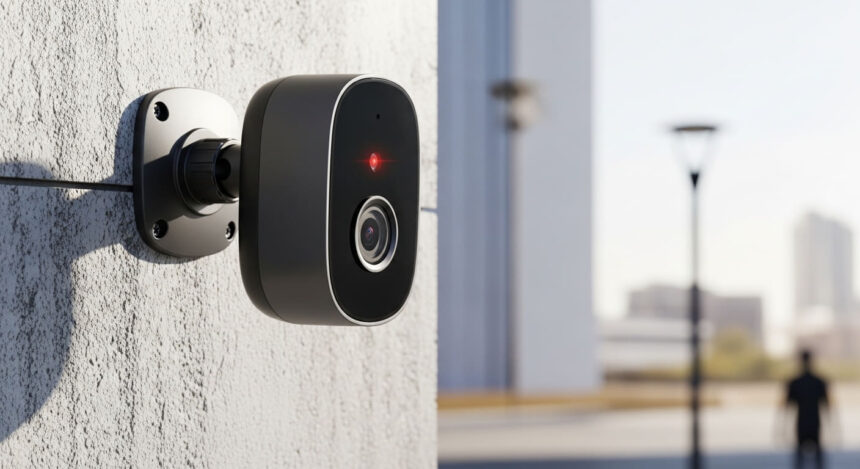
For many Australian homeowners, the concept of home security has shifted from a luxury to a standard part of property management. We all want to feel safe in our homes, whether we are in a bustling suburb of Sydney, a quiet street in Melbourne, or anywhere in between. One of the most effective tools for achieving this peace of mind is the humble Security Camera.
While we see them every day on street corners and in shopping centers, understanding exactly how they function inside a residential home can be a bit of a mystery. You might wonder how they see in the dark, where the footage goes, or if they will slow down your NBN connection.
This guide breaks down the mechanics of a modern Security Camera system. We will explore how they capture images, how they store those memories, and what features matter most for the unique Australian climate and lifestyle.
The Basic Mechanics: The Eye and The Brain
At its core, a Security Camera operates similarly to the human eye. It needs to capture light and convert it into a signal that can be processed.
The Lens and Sensor
The process begins at the lens. Light reflects off objects in your driveway or garden and enters the camera lens. This light hits an image sensor, which is the electronic equivalent of the retina. In older days, this was an analog process, but today, almost every reliable system uses digital sensors.
The quality of this sensor determines the resolution. You might hear terms like “4 Megapixel” or “4K.” In simple terms, a better sensor captures more dots of light (pixels). For a home security setup, this is crucial. If an intruder is standing at your front gate, you need a sensor capable of capturing enough detail to identify a face or a number plate, rather than just a blurry shape.
Processing the Image
Once the sensor captures the light, the camera’s internal processor cleans up the image. It adjusts for brightness, contrast, and color balance. This is particularly important in Australia, where we have harsh, bright sunlight during the day and deep shadows in the afternoon. A high-quality Security Camera uses a feature called Wide Dynamic Range (WDR) to balance these extremes so you can see details in both the bright and dark areas simultaneously.
Transmission: How the Signal Travels
After the image is captured and processed, it needs to go somewhere. This is where the difference between various systems becomes apparent.
Wired Systems (The Professional Standard)
In the professional security industry, wired systems are the gold standard. These typically use “Power over Ethernet” (PoE) technology. A single network cable runs from the recording box to the camera. This cable transmits the video signal back to the recorder while simultaneously sending power to the camera.
For Australian homes, especially those with double-brick walls or metal roofs that block Wi-Fi signals, wired systems are far superior. They provide a stable connection that does not drop out when you turn on the microwave or when the NBN is having a slow day.
Wireless Systems
Wireless cameras transmit the video data over your home Wi-Fi network. While convenient for renters who cannot drill holes, they are susceptible to interference. They also rely heavily on batteries, which can be a hassle to change, especially if the camera is mounted high up under the eaves.
Storing the Footage: Where Does it Go?
Capturing the video is only half the job; you need to be able to watch it back.
Network Video Recorder (NVR)
Most professional installations, such as those provided by Advance Security, utilize an NVR. This is a dedicated box, usually tucked away in a cupboard or study, containing a hard drive. All your cameras feed their footage directly to this box.
The benefit of an NVR is that it records 24/7 without using your internet data. It creates a closed loop. You can typically store weeks of footage depending on the size of the hard drive. This is the preferred method for serious home security because your footage is physically in your house, not on a server overseas.
Cloud Storage
Some consumer-grade cameras send footage to the “cloud” (servers on the internet). While accessible, this often requires a monthly subscription fee. It also uses your internet upload speed. If your NBN connection is slow, uploading high-definition video from multiple cameras can choke your bandwidth, making Netflix buffer or Zoom calls lag.
Seeing in the Dark: Night Vision Technology
Crime doesn’t stop when the sun goes down. In fact, visibility at night is often more important than during the day.
Infrared (IR)
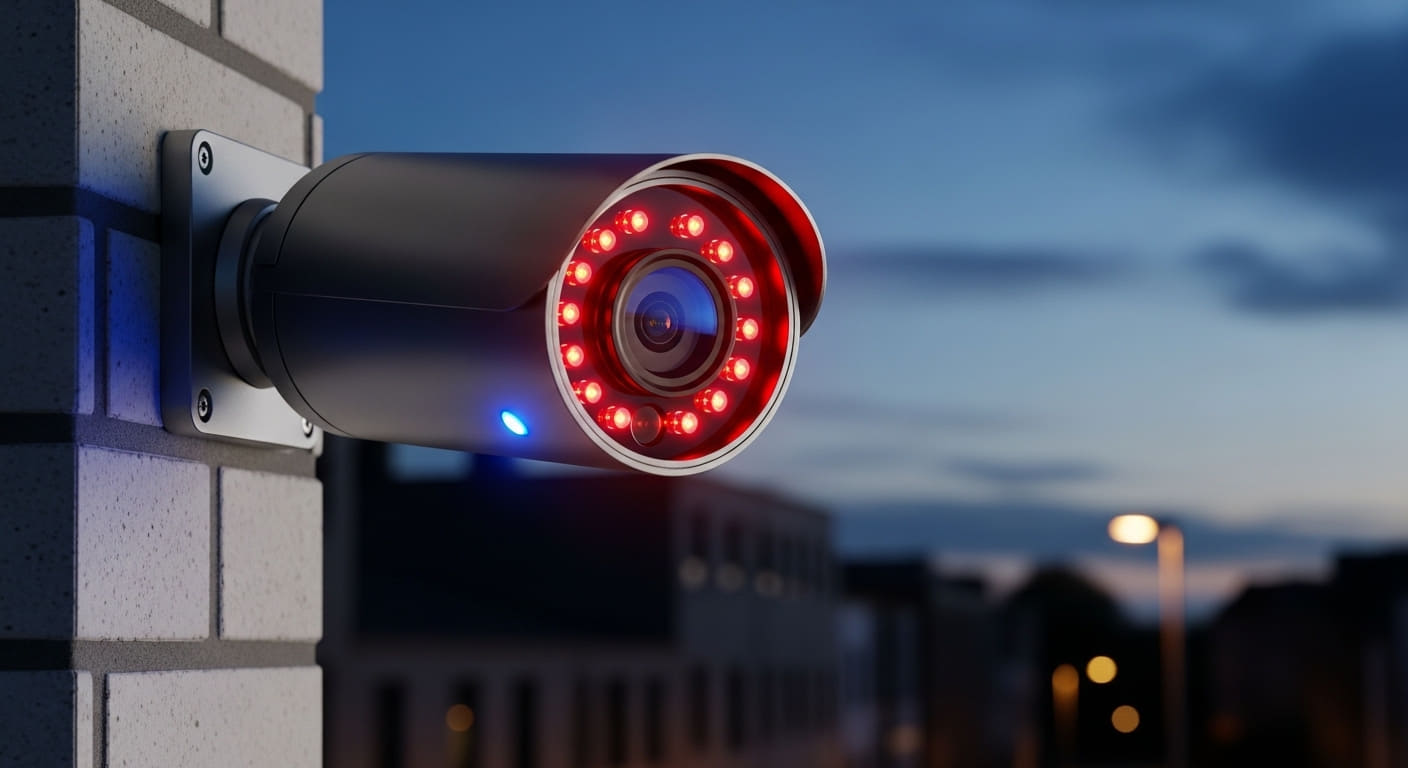
Most standard cameras use Infrared LEDs. When the light level drops, a sensor triggers the camera to switch to “night mode.” The LEDs around the lens blast invisible infrared light into the area. The camera sensor can see this light, even though human eyes cannot. The result is a crisp, black-and-white image.
Starlight and Color Night Vision
Newer technology allows cameras to stay in color mode even in very low light. These sensors are incredibly sensitive. With just a little ambient light from a streetlamp or the moon, a modern Security Camera can provide a full-color image at night. This is valuable for police reports, as knowing the intruder wore a “red hoodie” is more helpful than “a grey hoodie.”
Features That Matter in Australia
When selecting a system for an Australian home, you need to consider our specific environment.
Weather Resistance (IP Ratings)
Our climate is tough. We face blistering heatwaves, torrential storms, and fine dust. A camera mounted outdoors must have a high Ingress Protection (IP) rating, typically IP66 or IP67. This means the unit is completely dust-tight and can withstand powerful jets of water (heavy rain). Cheap indoor cameras placed outside will fail quickly under the Australian sun.
Dealing with Wildlife
Australia is home to spiders, and spiders love cameras. The infrared light attracts moths, and the moths attract spiders, who build webs across the lens. At night, the IR light reflects off the web, blinding the camera. Professional cameras often have designs that minimize web attachment, or “smart” analytics that ignore the motion of a swaying web so your phone isn’t buzzing all night with false alarms.
Intelligent Motion Detection
Early digital cameras would trigger an alert if any pixel changed. This meant a tree blowing in the wind or a cloud passing the sun would set off the alarm. Modern systems use Artificial Intelligence (AI) to recognize shapes. They can distinguish between a human, a vehicle, and a cat. This means when your Security Camera sends you a notification, it is usually something worth looking at.
The Legal Landscape: Filming in Australia
It is important to understand the rules before you install. In Australia, you generally have the right to film your own property for security purposes. However, you must be careful about privacy.
You should aim your cameras so they primarily film your land. Filming the public footpath or street is usually acceptable if it is incidental to filming your property, but you should avoid pointing cameras directly into a neighbor’s window or backyard. This can be considered a breach of privacy or a nuisance.
Audio recording is trickier. The Surveillance Devices Act varies by state (NSW, VIC, QLD, etc.), but generally, recording private conversations without consent is illegal. Many installers will disable audio recording on external cameras to ensure you remain on the right side of the law while still capturing the necessary video evidence.
Installation: Why Expertise Matters
While you can buy cameras off the shelf, the installation process is where the system succeeds or fails.
Cabling and Licensing
In Australia, installing permanent cabling for data or security often requires a registered cabler with an ACMA license. This ensures the cabling is safe and does not interfere with other electrical systems.
Angle and Placement
A professional installer knows exactly where to place a Security Camera to maximize coverage and minimize blind spots. They know how to account for the sun’s position so the lens isn’t blinded at sunrise, and they know how to mount the camera securely so it cannot be easily knocked down by a broom handle.
Connecting the system to your mobile phone for remote viewing also requires network configuration. A professional team ensures this is done securely, so you are the only one watching your home.
Questions and Answers: Common Questions About Security Camera in Australia
Q: Will my security camera work during a power outage?
Standard wired systems will turn off if the house loses power. However, a professional installation can include a Uninterruptible Power Supply (UPS) for the recording unit. This is a battery backup that keeps the NVR and cameras running for a period during a blackout. Given the frequency of storms in Australia, this is a highly recommended addition.
Q: Does a security camera use all my NBN data?
If you use a system with a local recorder (NVR), it uses almost zero internet data to record. The footage travels through the internal cables, not the internet. Data is only used when you open the app on your phone to view live footage or playback remotely. Therefore, a robust wired system will not slow down your home internet connection during daily use.
Q: Can I legally record the street in front of my house?
generally, yes. If your camera is focused on your property (like your driveway) and captures a portion of the public street or footpath in the background, this is usually permitted in Australia. The intent must be to protect your property, not to spy on public space. However, you should avoid deliberately targeting areas where people have a reasonable expectation of privacy.
Q: How long is the footage kept before it is deleted?
This depends on the size of the hard drive in your recorder and the number of cameras you have. A typical residential setup with 4 cameras and a 2 Terabyte hard drive might store 2 to 4 weeks of footage. Once the drive is full, the system automatically loops back and writes over the oldest footage first. You do not need to manually delete anything.
Q: Why do I get false alarms at night?
This is often due to insects or spider webs. The infrared light reflects off the web or the body of a moth, creating a bright flash that looks like motion to the camera. Regular cleaning of the camera housing with a soft brush (a “cobweb brush”) helps reduce this. Upgrading to cameras with “AI Human Detection” also significantly reduces these false alerts as the system learns to ignore bugs.
Conclusion: Your Path to a Successful Security Camera in Australia
Understanding how a Security Camera works removes the intimidation factor from home security. It is not magic; it is a blend of optical engineering, smart processing, and durable hardware designed to act as a guardian for your home. Whether it is deterring a potential intruder with its presence or providing critical evidence after an incident, the value of a quality system is undeniable.
For Australian homeowners, the choice often comes down to reliability. A hardwired system that withstands our summer heat, ignores our garden wildlife, and continues to record regardless of internet fluctuations is the superior choice. It transforms your home from a soft target into a secured fortress.
However, technology is only as good as its installation. To ensure your system is compliant with local laws, positioned for the perfect view, and integrated smoothly with your lifestyle, professional guidance is essential.
If you are ready to take control of your home’s safety, visit Advance Security. Their team of experts can guide you through the selection process, ensuring you get a Security Camera solution that is tailored to your specific property and needs. Don’t wait for an event to happen; proactive security is the best way to protect your family and your peace of mind.