


The three words “root canal treatment” are enough to make many people feel a sense of dread. It’s a procedure with a notorious reputation, often associated with old stories of pain and discomfort. If your dentist has recommended this treatment, your first instinct might be to put it off. You might think, “The pain isn’t that bad right now,” or “Maybe it will just go away on its own.”
Delaying this crucial procedure is one of the biggest mistakes you can make for your oral and overall health. The temporary relief you might feel by avoiding the appointment is far outweighed by the serious risks of waiting. The truth is, modern root canal treatment is a pain-relieving procedure designed to save your natural tooth and prevent much bigger problems down the line.
Before you push that appointment back another week, let’s talk about what a root canal treatment really involves and why acting promptly is so important.
Why is a Root Canal Treatment Necessary?
To understand why this treatment is so vital, it helps to understand a little bit about your tooth’s anatomy. A root canal treatment is not about causing pain; it is about getting rid of it for good.
Understanding the Tooth’s Anatomy
Beneath the hard outer layers of your tooth (the enamel and dentine) is a soft tissue called the pulp. The pulp contains blood vessels, nerves, and connective tissue. It extends from the crown of the tooth down to the tips of the roots in your jawbone. When you’re young, the pulp is important for the tooth’s growth and development. However, once a tooth is fully mature, it can survive without the pulp because it continues to be nourished by the tissues surrounding it.
When the pulp becomes inflamed or infected due to deep decay, repeated dental procedures, a crack, or an injury, it cannot heal itself. The inflamed tissue and bacteria inside the tooth can cause a severe toothache or lead to a serious infection. This is where a root canal treatment becomes essential.
The Signs You Might Need a Root Canal Treatment
Your body often sends clear signals that something is wrong inside your tooth. Ignoring them is a bad idea.
- Severe or Lingering Tooth Pain: The most common sign is a persistent toothache. The pain might be a constant throb, or it might be triggered by biting down or consuming hot or cold foods and drinks, with the sensitivity lasting long after the trigger is gone.
- Swelling and Tenderness: The gums near the affected tooth may become swollen and tender to the touch. The infection can cause swelling that extends to your face or neck.
- A “Pimple” on the Gum: An abscess, which is a pocket of pus caused by the infection, can form at the root tip. This can look like a small, recurring pimple on your gum line. If it drains, you might experience an unpleasant taste or smell.
- Tooth Discolouration: An infection in the pulp can damage the blood supply to the tooth, causing it to darken and appear greyish or black.
- No Symptoms at All: Sometimes, a chronically infected tooth can lose its ability to feel pain because the nerve inside has died. Your dentist might spot the infection on a routine dental X-ray, even if you feel nothing. This “silent” infection is still dangerous and requires treatment.
The Myth vs. The Reality: What to Expect During Treatment
Let’s clear up the biggest misconception: root canal treatment is not a painful ordeal. The stories you’ve heard likely come from a time before modern anaesthetics and techniques. The reality is that the procedure itself should be no more uncomfortable than getting a standard filling. The pain people associate with the treatment is actually the pain from the infection before the treatment.
A root canal treatment is performed to eliminate that pain and save the tooth.
The Step-by-Step Process
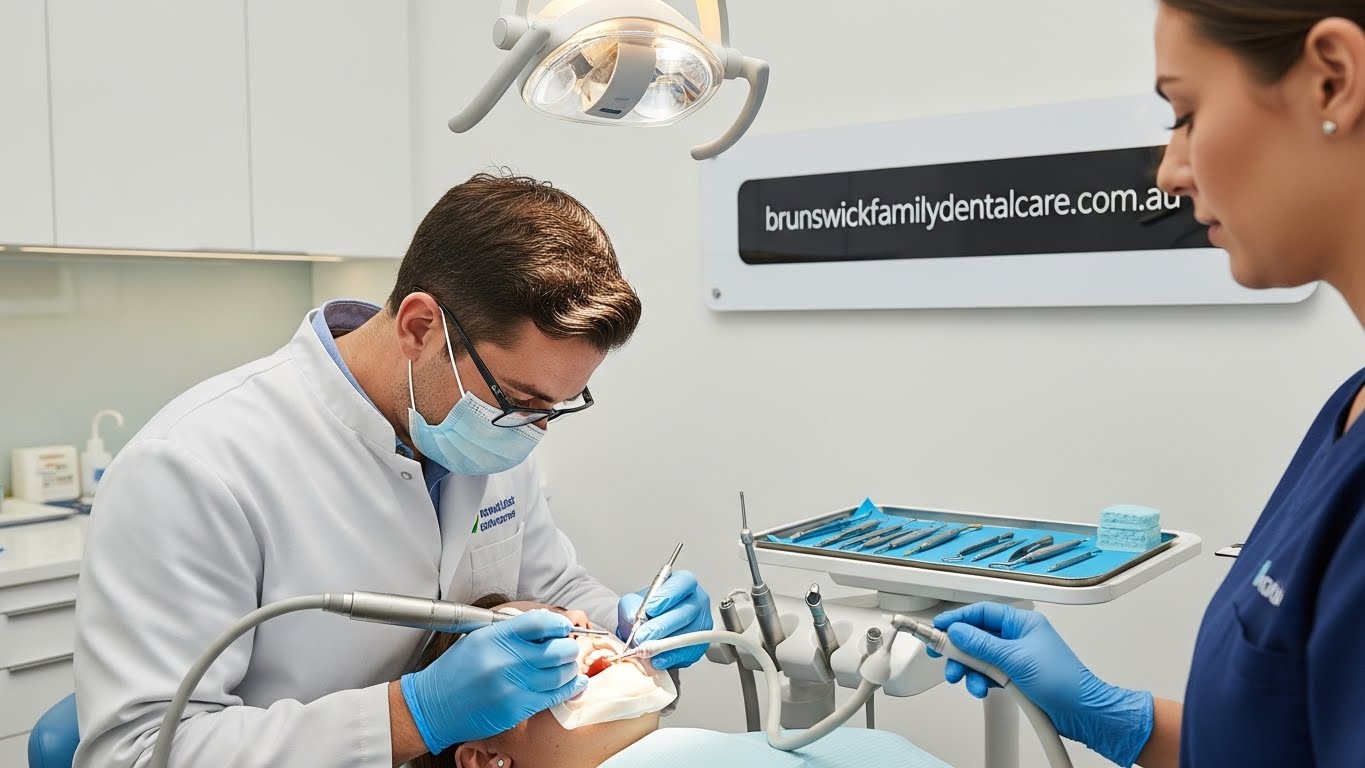
While every case is unique, the procedure generally follows these steps:
- Getting Comfortable: First, your dentist will ensure the area is completely numb using a local anaesthetic. Your comfort is the top priority. Many clinics in communities like Brunswick also offer sedation options for anxious patients.
- Accessing the Pulp: A small opening is made in the crown of the tooth to access the infected pulp chamber.
- Cleaning and Shaping: Your dentist will carefully remove the infected or inflamed pulp from inside the tooth and root canals. The inside of the tooth is then cleaned, disinfected, and shaped to prepare it for filling.
- Filling and Sealing: The cleaned canals are filled with a rubber-like, biocompatible material to seal them off completely. This prevents bacteria from re-entering.
- Restoring the Tooth: The final step is to restore the tooth’s function and appearance. Because a tooth that needs a root canal treatment is often weakened, your dentist will almost always recommend placing a dental crown on top. This protects the tooth from fracture and allows you to chew with confidence.
The Dangers of Delaying a Root Canal Treatment
Putting off a recommended root canal treatment is a gamble. The infection will not heal on its own. It will only get worse, leading to more pain, more complex problems, and more expensive solutions.
The Pain Will Get Worse
While an infected tooth might have periods where it doesn’t hurt, the infection is still active and spreading. Eventually, the pain will return, and it is often more severe and debilitating than before. This can lead to a dental emergency at the most inconvenient time.
The Risk of Spreading Infection
This is the most serious risk. An untreated infection can lead to a dental abscess. The infection can then spread from the tooth root into the surrounding jawbone. From there, it can travel to other parts of your body, such as your face, sinuses, and even your brain. This widespread infection, known as sepsis, is a life-threatening medical emergency that requires hospitalisation.
The Inevitable Tooth Loss
If the infection is left for too long, the tooth structure can be damaged beyond repair. At that point, the only remaining option is to have the tooth extracted. Saving your natural tooth with a root canal treatment is always the preferred outcome. Losing a tooth can lead to other problems, such as:
- Shifting of adjacent teeth into the empty space.
- Difficulty chewing properly.
- Bone loss in the jaw where the tooth used to be.
- The need for more expensive and extensive treatments, like a dental implant or bridge, to replace the missing tooth.
Navigating Root Canal Treatment in Australia
Understanding the process and logistics within the Australian healthcare system can help you feel more prepared and in control.
Understanding the Costs and Coverage
In Australia, a root canal treatment is classified as ‘Major Dental’ by most private health insurance funds. If you have extras cover, your policy may contribute towards the cost, but it’s crucial to check for:
- Waiting Periods: Most funds have a 12-month waiting period for major dental work.
- Annual Limits: Your policy will have a cap on how much you can claim per year.
- Specific Coverage: Check what percentage of the fee your fund covers for this specific procedure.
Many dental clinics in the Melbourne area, including family practices in Brunswick, offer payment plans to help spread the cost of treatment, making it more manageable. Remember, the cost of a root canal treatment and a crown is almost always less than the cost of extracting a tooth and replacing it with an implant later.
General Dentist vs. Endodontist
Many highly skilled general dentists routinely perform root canal treatments, especially on front teeth which have simpler canal systems. Your trusted family dentist is the best person to diagnose the problem and determine the best course of action.
For more complex cases, such as a molar with curved or narrow canals, or for a re-treatment of a previous root canal, your dentist may refer you to an endodontist. An endodontist is a specialist dentist who has completed additional years of training focused exclusively on diagnosing tooth pain and performing root canal treatments.
Questions and Answers: Common Questions About root canal treatment in Australia
Q: How much can I expect to pay for a root canal treatment in Melbourne?
Ans: The cost of a root canal treatment in Melbourne varies significantly depending on which tooth is being treated (molars are more complex and costly than front teeth) and the complexity of the case. It is important to remember that a final crown is also needed to protect the tooth afterwards, which is a separate cost. The best approach is to get a detailed treatment plan and quote from your dentist before proceeding.
Q: Will my private health insurance cover a root canal treatment in Australia?
Ans: Most private health insurance policies with ‘extras’ or ‘ancillary’ cover will contribute to the cost. A root canal treatment falls under ‘Major Dental’. You must check your specific policy for details on waiting periods, annual limits, and the percentage covered. Your dental clinic can provide you with the specific item numbers for the procedure so you can check with your health fund directly.
Q: Is a root canal treatment really painful?
Ans: No. This is the biggest myth in dentistry. With modern local anaesthetics, the procedure itself should be completely comfortable. The goal of the treatment is to relieve the severe pain caused by the tooth infection. Most patients report feeling significant relief after the procedure is completed.
Can a general dentist in Brunswick perform my root canal treatment, or do I need a specialist?
Ans: Many experienced general dentists in local communities like Brunswick are well-equipped and skilled at performing root canal treatments, particularly for less complex cases on anterior (front) teeth. If your case is more complicated—for example, a molar with multiple, curved canals—your general dentist will refer you to an endodontist to ensure you receive the best possible care.
Q: What happens if I choose to pull the tooth instead of getting a root canal treatment?
Ans: Extraction is an alternative, but it is often not the best one. Removing a tooth creates a gap that can cause surrounding teeth to drift and shift, affecting your bite. It also leads to bone loss in that area of your jaw. Replacing the missing tooth later with a dental implant or bridge is a more involved and often more expensive process than simply saving your natural tooth with a root canal treatment.
Conclusion: Your Path to a Successful root canal treatment in Australia
The decision to proceed with a recommended root canal treatment is a decision to prioritize your health, eliminate pain, and preserve your natural smile. The fear surrounding the procedure is based on outdated myths. Modern dentistry ensures the process is efficient, comfortable, and highly successful. Delaying treatment only invites more pain, greater risk of spreading infection, and the potential loss of your tooth.