
For most Australian households, the morning routine hinges on one critical appliance. Whether it is waking up with a steaming shower in Melbourne or washing the sand off after a Gold Coast surf, we rely heavily on our hot water systems. Yet, for a long time, we did not pay much attention to the large metal tanks sitting in our backyards or laundry cupboards. That is, until the electricity bill arrived.
With energy prices fluctuating and a national shift toward sustainable living, homeowners are looking for smarter ways to manage their power usage. The traditional electric storage tank, which works like a giant kettle boiling water all day and night, is rapidly falling out of favour. In its place, the hot water heat pump is emerging as the gold standard for modern, energy-efficient homes.
Switching to this technology is more than a trend; it is a practical response to the Australian climate and economy. By harnessing the ambient heat in the air, these systems offer a way to drastically reduce running costs without sacrificing the comfort of high-pressure hot water. This guide explores why this technology is taking over the market and how it fits into the lifestyle of the average Aussie family.
Understanding the Technology: The Fridge in Reverse
To appreciate the benefits, you first need to understand how the system works. Many people assume that because it runs on electricity, a hot water heat pump operates the same way as a standard electric system. In reality, the technology is completely different.
A traditional system uses a heating element inside the tank to generate heat directly. This takes a lot of energy. A heat pump, however, does not generate heat; it moves it. Think of your kitchen refrigerator. It works by pulling heat out of the insulated box to keep your food cold and expelling that heat into your kitchen.
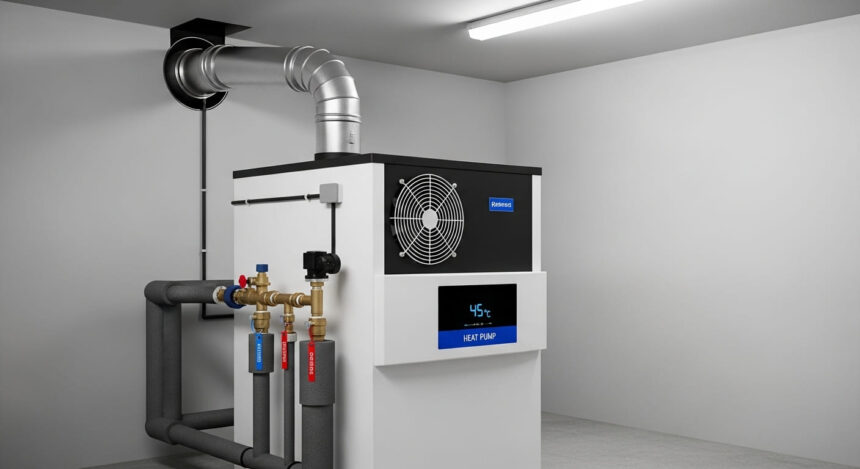
A heat pump works in reverse. A fan draws in the outside air across an evaporator. The refrigerant inside absorbs the heat energy from the air—even on cold days—and turns into a gas. A compressor then pressurizes this gas, which makes it extremely hot. This heat is transferred to the water in the tank through a heat exchanger. Because it is moving heat rather than creating it from scratch, it is incredibly efficient.
Massive Energy Efficiency Gains
The primary reason Australian homeowners are making the switch is the potential for savings. Heating water is often the single biggest energy consumer in a home, accounting for a significant portion of the quarterly electricity bill.
A standard electric system has an efficiency of roughly one to one. For every unit of electricity you put in, you get one unit of heat energy out. A high-quality hot water heat pump operates with a much higher efficiency, often referred to as the Coefficient of Performance (COP). In Australian conditions, these units can achieve an efficiency of 300% to 400% or more.
This means for every 1kW of electricity the unit consumes to run the fan and compressor, it generates 3kW to 4kW of heat for your water. Over a year, this drastic reduction in energy consumption can slash hot water bills by up to 70% or 80%. For a family of four, the savings are substantial, often paying for the cost of the unit over its lifespan.
The Solar “Thermal Battery” Effect
Australia leads the world in rooftop solar uptake. If you have solar panels, a heat pump is the logical partner for your system.
One of the challenges with solar power is using the energy when it is being generated—usually in the middle of the day when everyone is at work or school. If you don’t use it, you send it back to the grid for a low feed-in tariff.
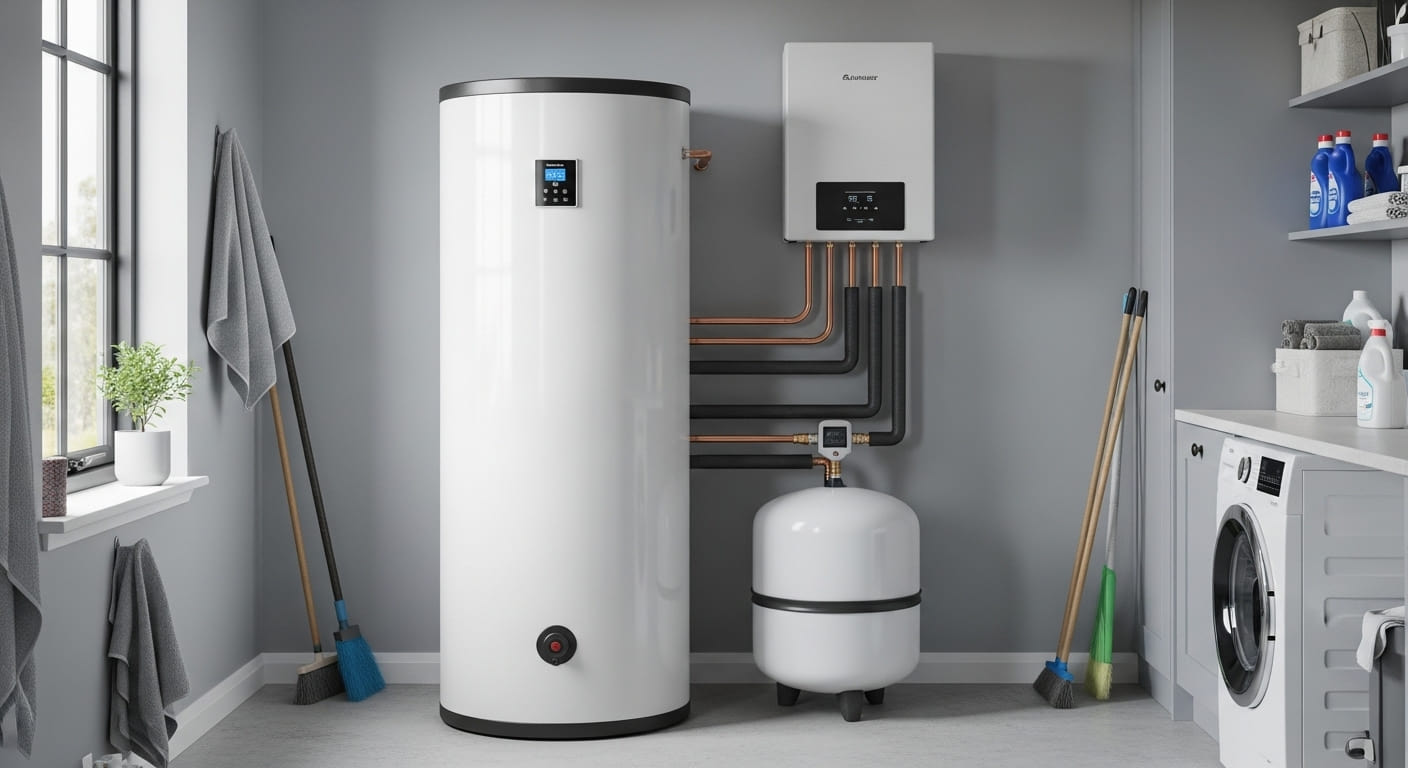
A hot water heat pump solves this problem by acting as a “thermal battery.” Because these units draw a low, steady amount of power (unlike the massive spike of a standard electric element), they can easily run off your solar production. By setting a timer to heat your water between 10 am and 3 pm, you are essentially heating your water for free using the sun. The insulated tank then stores this hot water, ready for your evening shower. This maximizes your solar investment and reduces your reliance on the grid even further.
Government Incentives and Rebates
Recognizing the environmental and economic benefits, Australian federal and state governments have introduced various incentives to encourage the uptake of this technology.
- STCs (Small-scale Technology Certificates): This is a federal scheme. When you install an eligible hot water heat pump, you generate a number of certificates based on the system’s efficiency and your location. These certificates are usually traded by the installer to give you an upfront discount on the purchase price.
- State-Based Rebates: Depending on where you live—whether it is Victoria, New South Wales, or South Australia—there are often additional rebates available for replacing inefficient electric or gas systems with heat pumps.
These incentives make the upfront cost of a heat pump very competitive with traditional systems, making the return on investment even faster.
Adapting to the Australian Climate
A common misconception is that because these systems extract heat from the air, they stop working in winter. While it is true that they work less hard when it is 30 degrees outside compared to when it is 5 degrees, modern units are designed to handle Australian winters with ease.
Quality systems utilize active defrost cycles and advanced refrigerants that allow them to harvest heat even when the ambient temperature drops below freezing. Whether you live in the frosty Southern Highlands or the tropical humidity of Queensland, the technology is robust enough to provide reliable hot water year-round.
However, placement matters. Because the unit needs to breathe, it requires a well-ventilated space, usually outdoors. Installing it in a spot with good airflow ensures it can operate at peak efficiency.
Durability and Tank Materials
When investing in a new system, longevity is key. Australian water quality varies wildly from region to region. In some areas, “hard” water with high mineral content can cause standard steel tanks to corrode quickly.
This is why looking at the tank construction is vital. Premium units often feature stainless steel tanks or high-grade vitreous enamel linings. Stainless steel is particularly well-suited to Australian conditions as it resists corrosion and often does not require a sacrificial anode (a metal rod that rusts to save the tank), reducing maintenance requirements. A supplier like Wilson Hot Water understands the importance of using robust materials that withstand local conditions, ensuring the system lasts for many years.
Moving Away from Gas
For a long time, gas continuous-flow systems were considered the efficient alternative to electric tanks. However, the landscape is changing. With the rising cost of gas and a push towards “all-electric” homes to reduce carbon emissions, gas is becoming less attractive.
Installing a hot water heat pump allows homeowners to disconnect from the gas grid entirely. This saves money on the daily supply charge for gas and future-proofs the home as the economy transitions toward renewable electricity. For new builds, going all-electric is becoming the standard approach for a sustainable future.
Noise Considerations
Because a heat pump uses a compressor and a fan, it does make a sound when it is running. It is roughly equivalent to the outdoor unit of a split-system air conditioner.
While modern units are very quiet, thoughtful installation is important. You would generally avoid placing the unit directly outside a bedroom window. Placing it near the laundry or the garage is usually the best option. Most units also have timer functions, so you can program them to run during the day when background noise is higher, ensuring silence at night.
Questions and Answers: Common Questions About hot water heat pump in Australia
Q: Will a heat pump work if I don’t have solar panels?
A: Yes, absolutely. Even without solar panels, a hot water heat pump is significantly cheaper to run than a standard electric storage heater. Because it uses the ambient warmth in the air to do the heavy lifting, it consumes far less electricity from the grid, lowering your bills regardless of your power source.
Q: Do I need a backup booster element?
A: Most modern heat pumps are designed to be standalone units that do not require a booster for daily use. However, some models do come with an electric element built-in as a backup. This might kick in only during extreme conditions—like extraordinarily high usage or extremely cold temperatures—to ensure you never run out of hot water.
Q: How long does a heat pump system last?
A: The lifespan of a heat pump is generally comparable to a traditional system, typically ranging from 10 to 15 years depending on the quality of the unit and the water conditions. Choosing a unit with a high-quality tank, such as stainless steel, and ensuring the fan intake is kept clear of debris will help maximize its life.
Q: Is it difficult to install?
A: In most cases, installing a hot water heat pump is a straightforward job for a licensed plumber and electrician. If you are replacing an existing electric tank, the infrastructure is often already there. The main difference is that the heat pump must be installed outdoors or in a very well-ventilated area to function, whereas old electric tanks could be hidden in cupboards.
Q: Can it handle a large family?
A: Yes. Heat pumps come in various tank sizes, typically ranging from 170 litres up to 300 litres or more. A properly sized system will easily provide enough hot water for a large family with multiple bathrooms. It is important to consult with a specialist to match the tank size and recovery rate to your household’s specific usage patterns.
Conclusion: Your Path to a Successful hot water heat pump in Australia
The transition to a more efficient home is a journey, and changing how you heat water is one of the most impactful steps you can take. The benefits of installing a hot water heat pump are clear: lower monthly bills, reduced environmental impact, and the ability to leverage Australia’s abundant solar energy.