


A stump sitting in your yard after a tree falls can disrupt plans for a smooth lawn or new garden bed. Wanting to clear it quickly makes sense, especially when regrowth starts or it blocks daily activities. Stump removal doesn’t have to drag on if you approach it with the right steps. In Australia, where yards face everything from heavy rains to dry spells, speeding up stump removal keeps your space usable sooner.
This guide covers ways to make stump removal faster, from preparation to methods that work well in our conditions. It includes local details on rules and practices that fit the landscape. You’ll discover how to handle stump removal efficiently, turning a leftover nuisance into cleared ground without unnecessary delays.
Grasping the Essentials of Stump Removal
Stump removal involves eliminating the remaining base after a tree comes down, preventing issues like new shoots or pest hideouts. Understanding the process helps you choose paths that lead to quicker results.
Factors like stump size, root depth, and soil type influence speed. In our continent’s varied terrain, from coastal sands to inland clay, adapting methods ensures stump removal goes smoothly.
Reasons Speed Counts in Stump Removal
Delaying stump removal allows problems to grow, such as roots spreading or wood rotting into the soil. Acting promptly restores your yard for planting or play.
Benefits of faster stump removal:
- Reduces time for weeds or insects to settle
- Allows immediate reseeding or landscaping
- Minimizes disruption to yard routines
- Prevents further decay that complicates later work
Australia’s climate accelerates stump breakdown in humid areas, making timely stump removal key to avoiding deeper soil issues.
Overview of Stump Removal Approaches
Methods range from hands-on to machine-based, each with potential for speed:
- Grinding: Machines chew the stump below ground
- Digging: Tools expose and lift the base
- Chemicals: Agents soften wood for easier breakdown
- Burning: Heat reduces mass, where allowed
Selecting based on your setup leads to effective stump removal without prolonged effort.
Preparing the Site to Hasten Stump Removal
Good groundwork sets the stage for rapid stump removal. Clearing obstacles and planning ahead cuts down on interruptions.
Begin by evaluating the stump’s surroundings—note nearby plants or structures that need protection.
Key Preparation Actions for Stump Removal
These steps streamline the process:
- Remove loose debris like leaves or rocks around the base
- Mark underground utilities to avoid surprises
- Water the area lightly if soil feels hard, aiding tool entry
- Trim low branches that might snag equipment
In Australia, checking for services like gas or water lines through national locators prevents accidents during stump removal. Wet seasons in the north might require drying the site first, while dry southern soils benefit from moisture to loosen roots.
Tools and Safety for Quicker Stump Removal
Having the right gear speeds things up while keeping risks low:
- Gloves and eyewear for protection
- Shovels or axes for initial exposure
- Ropes to secure loose parts
- Barriers to keep others away
Local practices emphasize safety gear, especially in fire-prone zones where sparks from tools could ignite dry grass. This preparation ensures stump removal proceeds without pauses for fixes.
Methods to Accelerate the Stump Removal Process
Once ready, apply techniques that target the stump directly. Combining approaches often yields the fastest stump removal.
Focus on what’s practical for your resources and location.
Mechanical Options for Swift Stump Removal
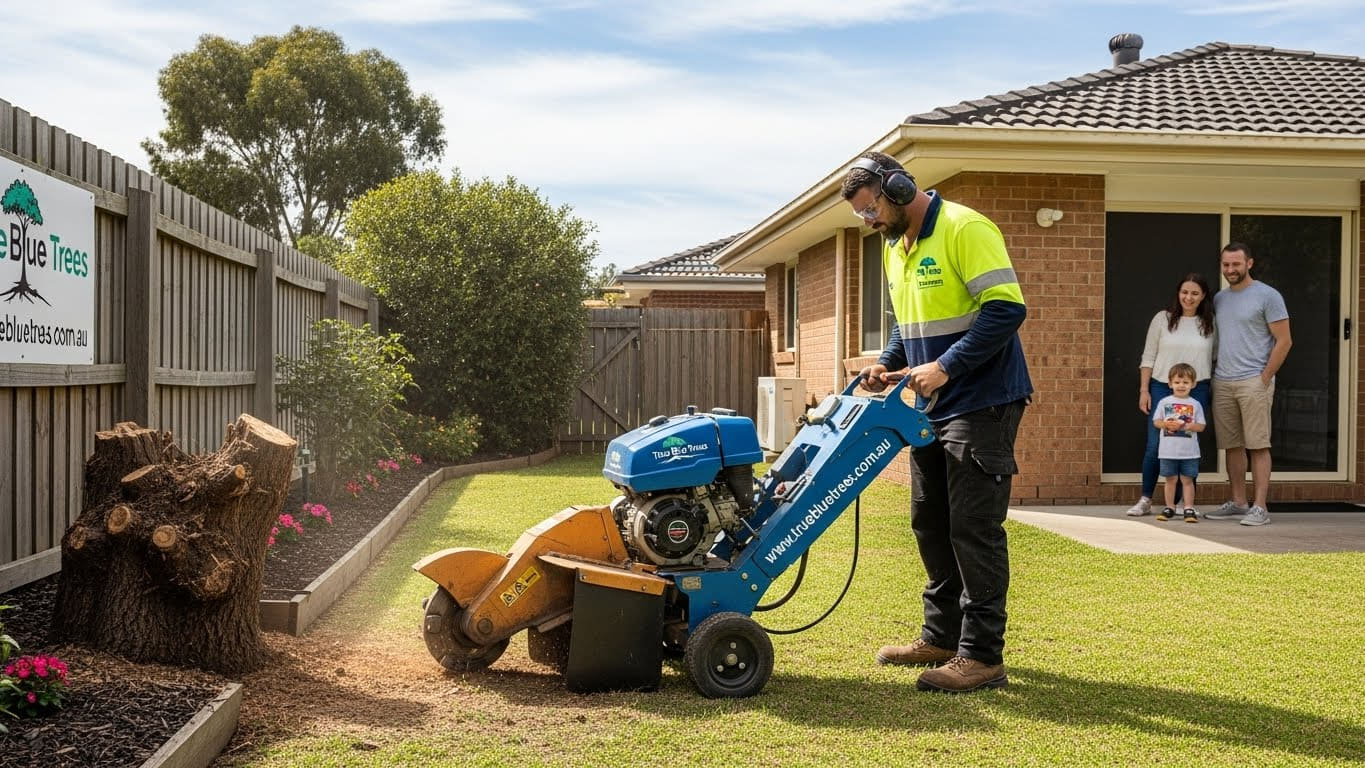
Grinding stands out for its efficiency, using powered tools to pulverize the wood.
How it works:
- Position the machine over the stump
- Lower the blade to chip downward
- Continue until below soil level
- Backfill the hole with dirt
This method suits most stumps, providing quick stump removal in confined yards. In urban Australia, compact grinders fit between fences, while larger rural ones handle old-growth bases.
Chemical and Natural Aids in Stump Removal
For slower but hands-off speed, chemicals break down the stump over days.
Application tips:
- Drill holes into the top surface
- Pour in a rotting agent
- Cover with a tarp to retain moisture
- Check progress weekly
Our eucalyptus stumps respond well to these, as natural oils aid decomposition. Regulations limit certain chemicals near water sources, promoting eco-friendly stump removal in sensitive areas.
Combining Techniques for Optimal Stump Removal Speed
Pair grinding with chemicals for stubborn cases—soften first, then grind.
This hybrid:
- Cuts machine time
- Reduces physical strain
- Minimizes dust and noise
- Allows faster site recovery
In coastal regions, salt-tolerant methods prevent corrosion on tools during stump removal.
Australian Specifics for Stump Removal
Stump removal here considers our environment and guidelines. Protected areas require approvals to safeguard habitats.
State variations apply: Eastern councils monitor works near natives, while western ones focus on water conservation. We appreciate trees for shade and ecology, so stump removal often includes plans for replacement planting. Fire seasons push for clearing to lower risks.
Examples: In southern suburbs, post-windstorm stump removal clears paths for community use. Tropical north handles cyclone debris with rapid stump removal to stop fungal spread. Services adapt to soils, from red earth to black cracking clay, ensuring stump removal matches local needs.
Cultural views favor sustainable practices, with stump removal enabling native regrowth or veggie gardens. Alternatives like mulching the stump for habitat suit some, but full removal prevails for open spaces.
Questions and Answers: Common Questions About Stump Removal in Australia
Q: What speeds up stump removal in wet climates?
Ans: Drying the site first eases grinding, preventing slips. In rainy Australian areas, stump removal benefits from timed works during drier spells.
Q: How do regulations shape stump removal near waterways?
Ans: Approvals protect ecosystems—check local plans. Stump removal follows these to maintain water quality and wildlife.
Q: Does stump removal reduce fire hazards here?
Ans: Yes, clearing dry wood lowers fuel. Many pursue stump removal to create safer zones in bush areas.
Q: Can stump removal improve yard drainage?
Ans: Absolutely—removing roots opens soil flow. This enhances stump removal outcomes in waterlogged grounds.
Q: What aids stump removal after storms?
Ans: Quick assessment and utility marks prevent delays. Stump removal restores access swiftly in affected regions.
Conclusion: Your Path to a Successful Stump Removal in Australia
Speeding up stump removal relies on solid preparation, suited methods like grinding, and awareness of site factors that influence progress. The guide details signs prompting action, tool use, and blends of techniques for efficiency. Australia’s guidelines for safety and ecology, along with regional adaptations, frame stump removal as a practical step—from city lots to country acres.
Vital points: Evaluate the stump early, gear up safely, and respect local rules. A sprouting base crowding your patio or roots clogging drains—stump removal addresses these directly.
Examine your yard today, clearing paths as needed. Seek expert input for the best method, secure permissions, and execute the plan. Follow with soil fill and seeding for renewal. Your ground levels out, ready for whatever comes next. Initiate the process now—smooth results follow focused effort.