
When homeowners think about upgrading their outdoor areas, the focus is almost always on the visual transformation. We picture ourselves hosting a summer barbecue on a sleek new patio, or parking the car on a grand, cobblestone driveway. We browse magazines and websites, falling in love with the look of French pattern Travertine or the modern industrial vibe of Bluestone.
However, a beautiful surface is worthless if it turns into a swimming pool every time it rains, or if the pavers are so uneven that family members are constantly tripping over them. This is the reality for many renovation projects where corners were cut. The true value of professional paving contractors lies not just in their ability to lay stones in a straight line, but in their ability to solve complex landscaping problems simultaneously.
A successful paving project is a trifecta. It must handle water management (drainage), it must be secure and hazard-free (safety), and it must look spectacular (style). Achieving all three requires a blend of engineering knowledge, precise craftsmanship, and an eye for design. It is a balancing act that transforms a backyard from a muddy patch of grass into a functional extension of the home.
The Drainage Dilemma: More Than Just Puddles
In Australia, our weather patterns can be extreme. We experience long periods of dry heat followed by intense, torrential downpours. If your outdoor area is not designed to handle this volume of water, the consequences can be severe.
Poor drainage is the most common cause of paving failure. If water pools on your patio, it encourages the growth of moss and algae, making the surface slippery and unsightly. Worse, if the water cannot escape, it seeps into the ground beneath the pavers. This softens the foundation (sub-base), causing the pavers to sink and creating uneven ruts.
The Science of the Slope
Experienced paving contractors use laser levels to calculate the “fall.” This is a slight slope, usually imperceptible to the naked eye, that directs water away from your home’s foundations and towards garden beds or stormwater drains.
In Canberra and surrounding regions, where the soil can be reactive clay, keeping water away from the house structure is vital to prevent shifting and cracking walls. A professional will often install linear strip drains—sleek, metal grates that sit flush with the paving—to capture runoff without ruining the aesthetic. This ensures that even during a heavy storm, your outdoor area remains usable and your home remains dry.
Safety First: Creating Non-Slip, Trip-Free Zones
Safety is often an afterthought until an accident happens. Uneven surfaces and slippery tiles account for a significant number of home injuries. A professional approach prioritizes the safety of everyone who uses the space, from toddlers running around to elderly relatives navigating the path.
Eliminating Trip Hazards
“Lippage” is a term used in the industry to describe when one paver sits higher than its neighbour. This creates a toe-stubbing edge. It usually happens when the base underneath was not prepared correctly or the pavers were not bedded down evenly.
Quality paving contractors spend the majority of their time on the sub-base preparation. They excavate the soft topsoil and replace it with layers of crushed rock and road base, compacting it until it is rock hard. This solid platform ensures that the pavers stay perfectly level for decades, eliminating trip hazards.
The Slip Factor
Not all stone is suitable for all areas. A glossy, honed tile might look stunning inside a kitchen, but if you lay it around a swimming pool, it becomes an ice rink when wet.
In Australia, floor surfaces are given a slip rating (P-rating). For outdoor areas, especially those exposed to rain or pool water, you generally need a rating of P4 or P5. Professionals will advise you on the right texture. For example, they might suggest “tumbled” or “exfoliated” finishes for outdoor stone. These textures provide grip underfoot even when wet, ensuring that style does not compromise safety.
Style That Adds Value
Once the engineering and safety aspects are sorted, the fun part begins: the style. The choice of material sets the tone for the entire property. Paving is a major investment, and choosing the right look can significantly boost the market value of your home.
The current trends in Australian landscaping favour natural materials that blend with our environment.
- Travertine: With its warm creams and beige tones, it brings a Mediterranean feel that is very popular for pool areas. It stays cool underfoot in the hot sun.
- Bluestone: This dark, grey volcanic stone is a favourite for modern, architectural homes. It is incredibly dense and durable.
- Concrete Pavers: Modern manufacturing has created large-format concrete pavers that mimic the look of stone at a more accessible price point. They offer a clean, uniform look.
Skilled paving contractors act as design consultants. They help you match the colour of the pavers to your roof tiles and brickwork. They plan the layout to ensure symmetry. For example, they will measure the space to ensure that the cut pavers at the edges are equal on both sides, creating a balanced and professional finish.
The Process: How Pros Achieve All Three
The difference between a DIY job and a professional installation is the process. It is methodical and follows strict building standards.
- Site Assessment: Before a quote is even written, the contractor assesses the site. They look at the soil type, the existing drainage, and access issues. In Canberra, they also consider the frost factor. Frost can expand water trapped in cheap pavers, cracking them. Local experts know to recommend dense, frost-resistant stone.
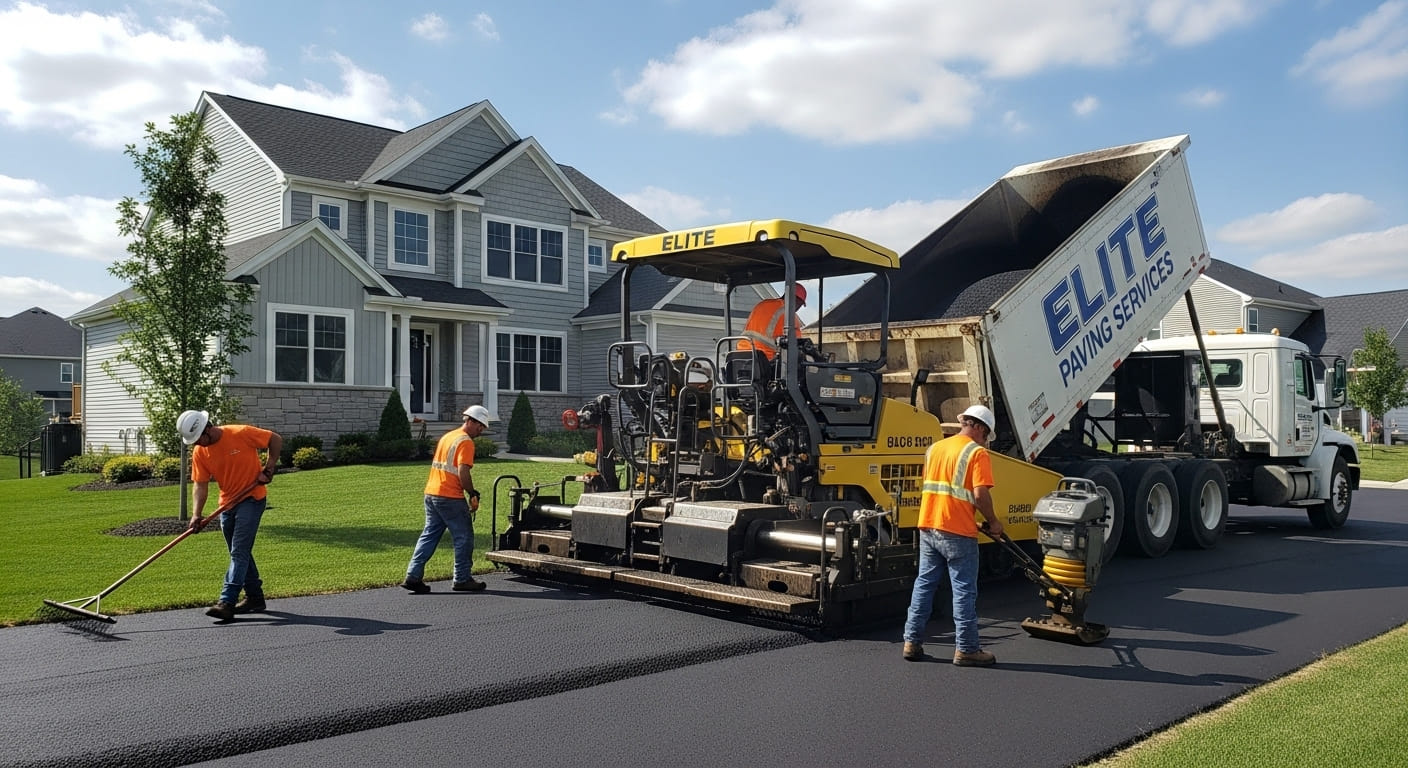
- Excavation and Base Work: This is the heavy lifting. Removing organic matter and installing a deep, compacted road base is the secret to longevity.
- Laying and Cutting: The pavers are laid on a bed of river sand or mortar. Cuts are made using diamond-blade wet saws for clean, sharp edges—not jagged breaks.
- Locking It In: Edge restraints (concrete haunching) are installed underground to stop the pavers from spreading over time. Polymeric sand is swept into the joints. This special sand hardens when wet, stopping weeds and ants from ruining the finish.
Navigating Local Regulations
In the Australian Capital Territory (ACT) and surrounding NSW areas, there are specific rules regarding driveways and hard surfaces.
For instance, the “verge” or nature strip is government land. If you are paving a driveway that crosses the verge to the street, you need specific government approval. There are strict rules about the thickness of the pavers (to handle heavy vehicles) and the gradient.
Furthermore, there are regulations regarding “permeable surfaces.” To prevent the city stormwater system from being overwhelmed, you are often limited in how much of your block can be completely sealed with concrete. Professional paving contractors understand these ratios. They can suggest permeable paving solutions that allow water to soak into the ground, keeping you compliant with council rules while still giving you the hardstand area you need.
Questions and Answers: Common Questions About paving contractors in Canberra
Q: Do I need approval to pave my driveway in Canberra?
If you are replacing an existing driveway on private land with a similar footprint, you generally do not need a building approval (DA). However, any work on the driveway “crossover” (the section on the nature strip connecting to the road) requires a permit from Transport Canberra and City Services (TCCS). This ensures the work meets public safety standards.
Q: Why do my pavers have white powder on them?
This is called efflorescence. It is a natural salt that is drawn out of the concrete or stone when it gets wet. It appears as a white, chalky residue. It is usually cosmetic and often weathers away over time. Good drainage helps minimize it. If it persists, your contractor can treat it with specialized cleaning acids.
Q: Can paving handle the Canberra frost?
Yes, but you must choose the right material. Canberra experiences frequent freeze-thaw cycles in winter. Porous, soft stones or cheap concrete pavers absorb water, which then freezes and expands, causing the face of the paver to pop off (spalling). You should ask your paving contractors for high-density, frost-resistant pavers like Granite, high-quality Bluestone, or vitrified porcelain.
Q: Is it better to concrete or pave a driveway?
Both have pros and cons. Poured concrete is low maintenance but can look plain and will eventually crack. Once it cracks, the repair is difficult and usually visible. Pavers offer more design flexibility and style. The biggest advantage of paving is repairability. If an underground pipe bursts or oil stains a section, you can lift up the affected pavers and replace them without digging up the whole driveway.
Q: How long does a paving project take?
A standard residential driveway (approx. 50-80 square metres) typically takes about 3 to 5 days to complete. This includes excavation, base preparation, laying, and sealing. Weather plays a big role; rain will delay the compaction of the base and the grouting, so timelines need to be flexible.
Conclusion: Your Path to a Successful paving contractors in Australia
Upgrading your home’s exterior is a significant financial commitment. It is not just about making the place look good for a Saturday afternoon BBQ; it is about protecting the structural integrity of your property through better drainage and ensuring the safety of your family with stable footing.