
Modern homes rely on complex systems that work quietly in the background to maintain comfort, safety, and efficiency. Heating, cooling, water supply, drainage, and indoor air quality all depend on properly functioning HVAC and plumbing systems. When these systems operate smoothly, homeowners rarely notice them. However, when problems occur, daily life can quickly become uncomfortable or even disruptive.
That is why smart home care requires more than occasional maintenance. It involves proactive attention to critical systems and access to experienced professionals who understand how heating, ventilation, cooling, and plumbing systems interact within a home. Working with an experienced HVAC contractor and plumber in Flemington, NJ ensures both systems operate efficiently and helps prevent small issues from turning into costly repairs.
The Hidden Systems That Keep Your Home Comfortable
Behind every comfortable home lies a network of systems designed to regulate temperature, provide clean water, and manage waste. While these systems are often installed separately, they work closely together to maintain a safe and efficient living environment.
Heating and cooling systems control indoor temperature and airflow. Boilers, furnaces, air conditioners, and heat pumps ensure that the home remains comfortable throughout the year. At the same time, plumbing systems supply fresh water, remove wastewater, and support essential appliances like water heaters, washing machines, and dishwashers.
Regular inspections performed by an experienced HVAC contractor and plumber in Flemington, NJ, help identify issues early and keep systems functioning efficiently. Preventative maintenance not only improves comfort but also extends equipment lifespan and reduces unexpected repair costs.
Why HVAC and Plumbing Systems Are Closely Connected
Although HVAC and plumbing systems serve different purposes, they often rely on each other to operate effectively. In many homes, heating systems depend on water distribution, while plumbing systems require temperature control to prevent damage or inefficiency.
For example, boilers use water to distribute heat throughout a home via radiators or radiant floor heating systems. Water heaters rely on plumbing infrastructure to deliver hot water to showers, sinks, and appliances. Similarly, HVAC systems regulate humidity levels, which helps protect pipes from condensation and moisture damage.
Because these systems interact so closely, a single problem can affect multiple parts of the home. For instance, poor ventilation can lead to humidity buildup, which may damage pipes and promote mould growth. Experienced technicians recognise these connections and address them proactively.
Energy Efficiency Starts with Proper System Maintenance
Energy efficiency has become one of the most important considerations for homeowners. Heating, cooling, and water heating together account for a large portion of household energy use. When systems operate inefficiently, energy bills increase while comfort decreases.
Routine maintenance helps ensure that HVAC and plumbing systems operate at peak efficiency. Cleaning components, replacing worn parts, and adjusting system settings all contribute to improved performance.
Protecting Your Home from Unexpected Emergencies
One of the biggest advantages of professional HVAC and plumbing expertise is the ability to prevent emergencies before they occur. While unexpected failures can happen, many serious issues develop gradually and show warning signs that trained professionals can identify.
For example, minor pipe leaks may appear harmless at first. Over time, however, they can lead to water damage, structural issues, or mould growth. Similarly, HVAC systems that struggle to maintain temperature may indicate airflow problems, refrigerant leaks, or mechanical wear.
Experienced professionals understand how to trace these symptoms back to their underlying causes. Their expertise allows them to resolve issues quickly and restore system reliability before problems escalate.
Smart Home Technology and Modern System Integration
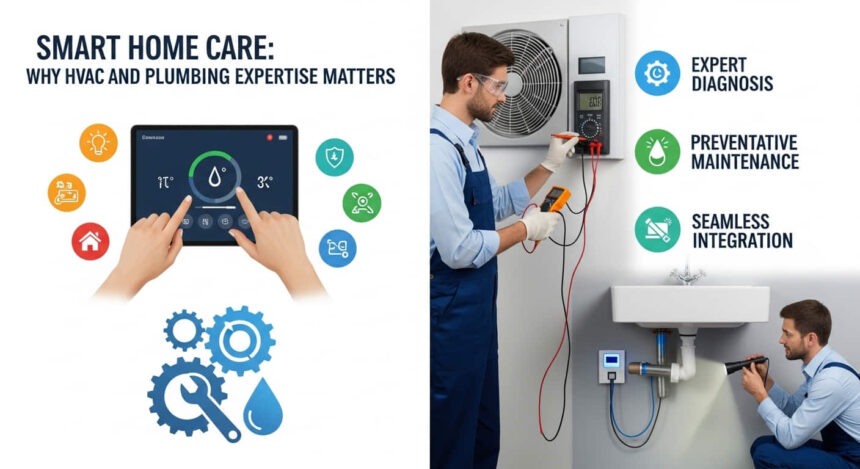
Modern homes increasingly incorporate smart technology designed to improve comfort, convenience, and efficiency. Smart thermostats, leak detection systems, and connected appliances allow homeowners to monitor and control critical systems remotely.
While these technologies offer valuable insights, they still rely on properly installed and maintained HVAC and plumbing infrastructure. Sensors and automation systems can detect problems, but resolving those issues requires professional expertise.
Professionals who specialise in both heating, cooling, and plumbing systems can ensure that smart home technologies function effectively. Their understanding of system integration allows them to optimise performance while maintaining safety and reliability.
Choosing the Right Professionals for Long-Term Home Care
Not all service providers offer the same level of experience or expertise. Choosing qualified professionals is one of the most important decisions homeowners can make when maintaining HVAC and plumbing systems.
Experienced technicians bring several advantages to the table. They understand local climate conditions, building codes, and common infrastructure challenges in the region. They also possess the training required to diagnose complex problems and implement safe, effective solutions.
Building a Preventative Maintenance Strategy
Smart home care involves planning ahead rather than reacting to problems after they occur. A preventative maintenance strategy helps homeowners protect their investment while ensuring consistent comfort and reliability.
Seasonal maintenance schedules typically focus on preparing systems for changing weather conditions. Heating systems are inspected before winter, while cooling systems receive attention before summer begins.
By partnering with experienced professionals and scheduling regular service appointments, homeowners create a proactive approach to home care that safeguards comfort and efficiency for years to come.
Final Thoughts
A comfortable home depends on more than modern appliances and attractive design. Behind the scenes, complex HVAC and plumbing systems work continuously to regulate temperature, provide clean water, and maintain healthy indoor conditions.
Because these systems are closely connected, maintaining them requires specialised knowledge and coordinated expertise. Professional inspections, preventative maintenance, and timely repairs ensure that heating, cooling, and plumbing infrastructure function efficiently and safely.
With the right expertise and a proactive maintenance strategy, homeowners can enjoy greater comfort, improved efficiency, and long-term peace of mind.