
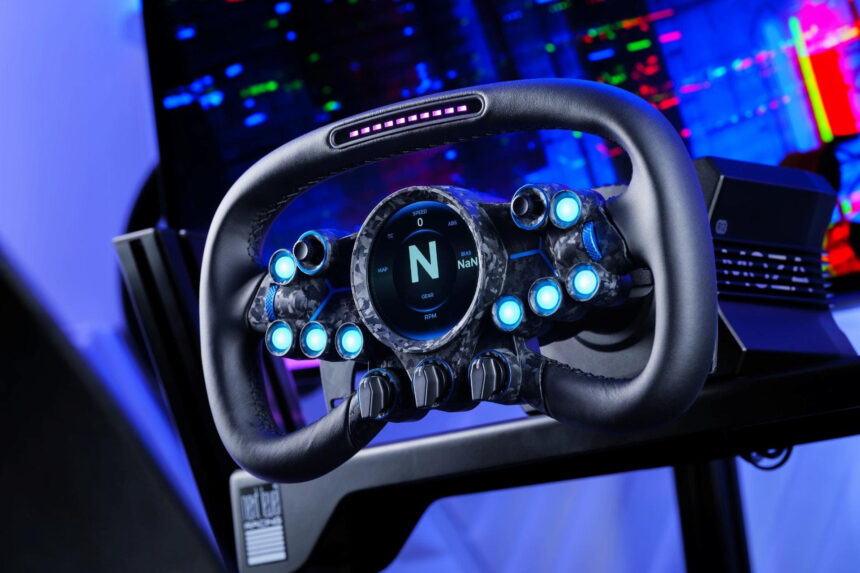
In professional sim racing, performance depends on more than software and skill. Hardware quality shapes realism, consistency, and long-term reliability. From structural rigidity to component precision, serious racers know that equipment built to endure intense use delivers smoother control, greater immersion, and confidence during every competitive lap.
At the professional end of sim racing, equipment is not a luxury—it is a foundation. From the first lap, racers feel the difference between gear that merely functions and gear that performs under pressure. Brands such as Conspit are often discussed in this context because build quality directly affects feedback accuracy, durability, and the ability to train at a high level without interruption.
How Build Quality Shapes Competitive Sim Racing Outcomes
Professional sim racing demands consistency. Sessions are longer, forces are stronger, and tolerances are tighter. Poorly built equipment can flex, degrade, or lose calibration, undermining driver confidence. High build quality ensures that what the driver feels through the wheel, pedals, and chassis remains stable lap after lap.
Strong construction also protects the investment. Professional-grade equipment is designed for repeated stress cycles, not occasional use. That distinction matters when precision inputs are measured in millimetres and milliseconds.
Structural Rigidity and Its Impact on Control
Rigidity is the backbone of any serious sim racing setup. Flex in a cockpit or mounting point absorbs force that should reach the driver.
How Rigidity Improves Driving Precision
A rigid frame ensures that steering torque, braking pressure, and vibration cues are transmitted accurately. When a chassis twists under load, feedback becomes muted or inconsistent. Over time, this can affect muscle memory and lap consistency.
High-quality frames use reinforced joints and thick-profile materials to maintain alignment, even under heavy braking or strong force feedback.
Component Quality and Force Feedback Accuracy
Force feedback systems are only as good as the components supporting them. Motors, bearings, and housings must work together without play or resistance.
Why Internal Precision Matters
Tightly machined parts reduce friction and signal noise. This allows subtle details—such as tyre slip or surface changes—to be felt clearly. Lower-quality components may overheat or lose smoothness, reducing realism and increasing fatigue during extended sessions.
Pedals, Load Tolerance, and Long-Term Consistency
Pedals experience some of the highest physical loads in sim racing, especially braking systems designed to replicate real-world pressure.
The Role of Durable Pedal Construction
Well-built pedals maintain consistent resistance over time. Materials that resist deformation ensure braking points remain predictable. Inferior designs may soften or drift, forcing drivers to recalibrate technique unnecessarily.
This is why mid-tier and professional setups often prioritise pedal build quality before visual features.
Reliability Under Repeated Stress
Professional sim racers train frequently. Equipment may be used for hours daily, often at high force settings.
Why Durability Equals Confidence
Reliable equipment reduces downtime and distraction. When drivers trust their hardware, they focus fully on racecraft. Mid-session failures or gradual performance drops can break rhythm and reduce competitive edge. Conspit is commonly referenced in discussions about endurance-focused design for this very reason.
Practical Benefits Beyond Performance
Build quality also improves the ownership experience. Solid construction reduces noise, vibration, and the need for frequent maintenance. Adjustments hold their position, and components age predictably rather than failing suddenly.
Key Factors to Consider When Choosing High-Build-Quality Sim Racing Equipment
- Look for rigid mounting systems that minimise flex under load
- Prioritise pedal durability and consistent resistance over cosmetic features
- Check material thickness and joint reinforcement in cockpits
- Choose equipment designed for sustained high-force use
- Favour modular designs that allow parts to be replaced without compromising structure
Conclusion
In competitive sim racing, build quality underpins every aspect of performance. Rigid structures preserve accurate feedback, precision components maintain consistency, and durable materials withstand the demands of extended, high-intensity use. Together, these factors allow drivers to train and compete with confidence, knowing their inputs are translated faithfully. Over time, well-built equipment supports skill development, reduces interruptions, and delivers a more dependable and rewarding racing experience.